Rajeev Ram — The India He Never Played For
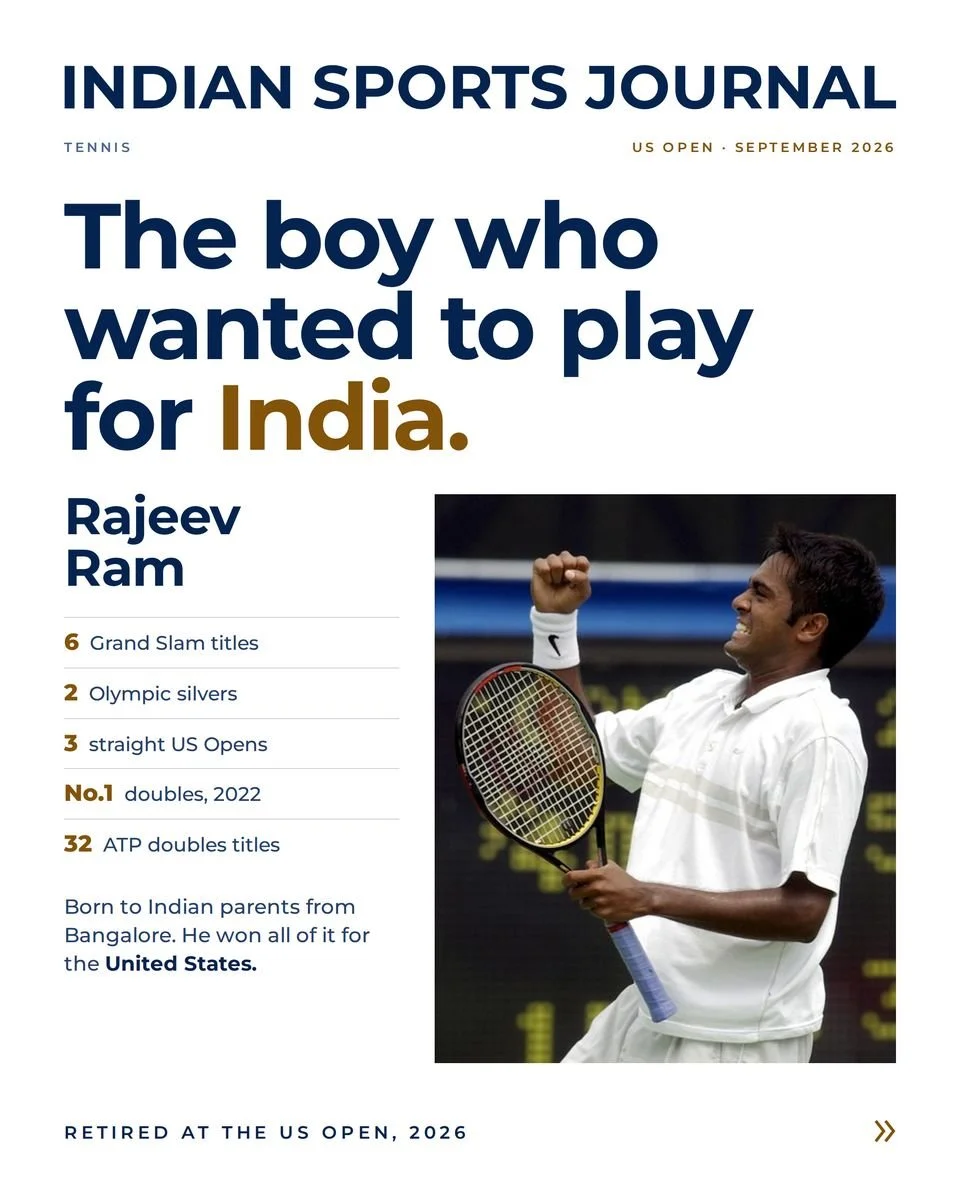
Six Grand Slam titles, two Olympic silver medals and a world No. 1 ranking, every one of them for the United States. The son of a Bangalore father looked into playing for India in his twenties. A passport rule, and an American life, settled the question.
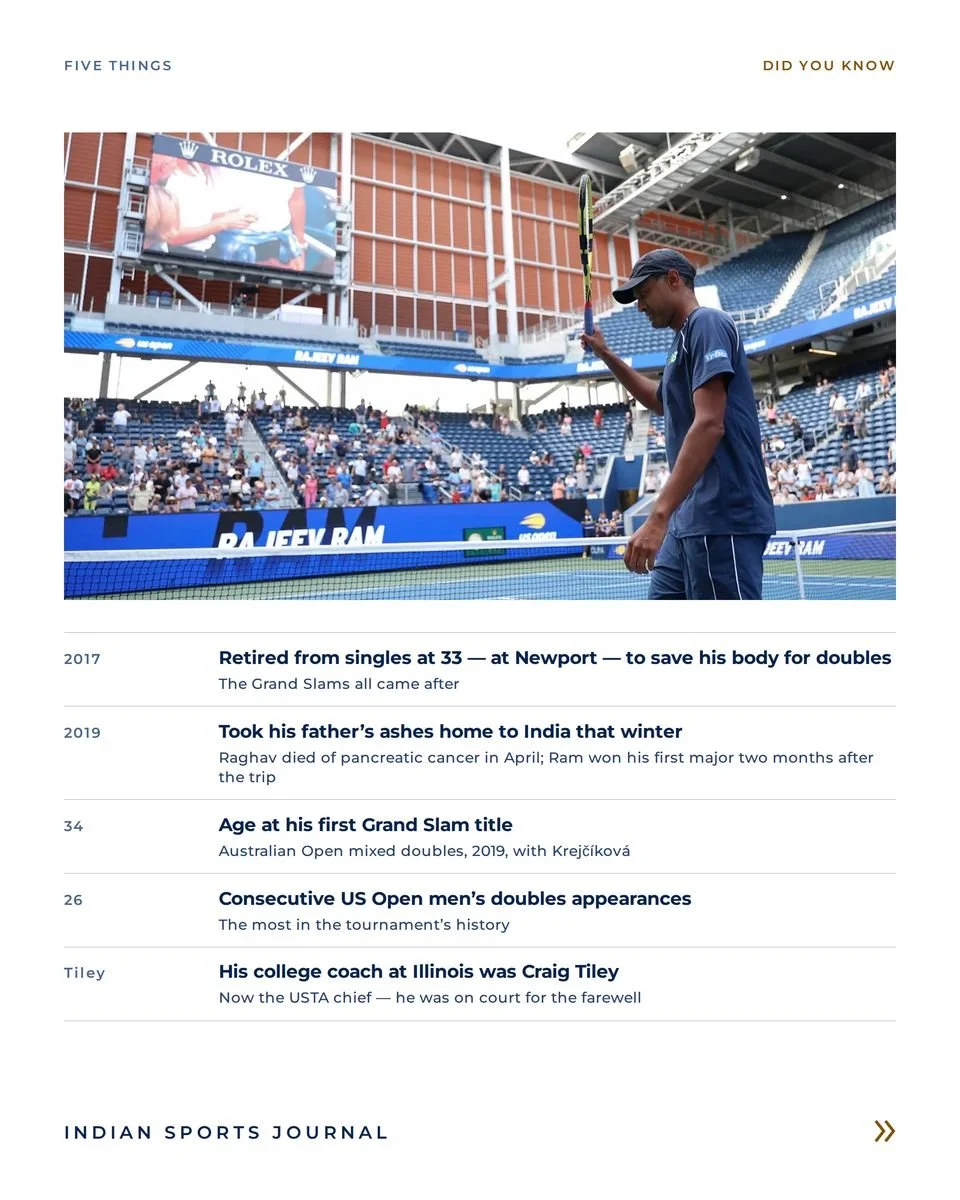
Rajeev Ram played the last professional match of his career on Thursday, a 6-3, 6-4 defeat beside Joe Salisbury in the men's doubles semi-finals of the US Open, against the German sixth seeds Kevin Krawietz and Tim Pütz. The presentation that followed on court was built from his own biography. Craig Tiley, who coached him at the University of Illinois and now runs the USTA, and Eric Butorac, a former doubles partner who is now the US Open's tournament director, handed him a plaque of his career highlights. His wife and his mother were there. His father was not. "There's one special person that's not here today, and that's my dad," Ram said, adding that his father had taught him the game. "So I hope I made you proud dad."
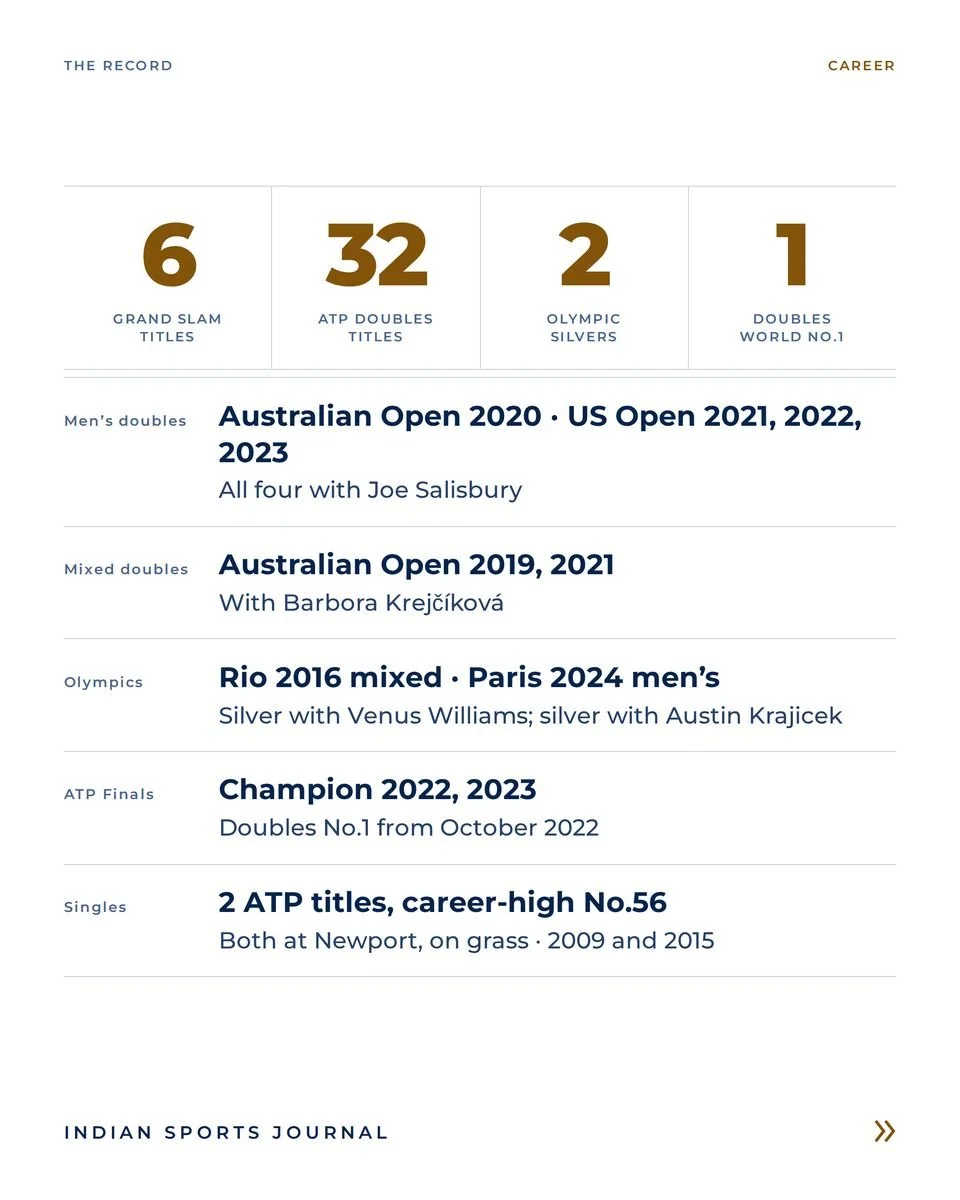
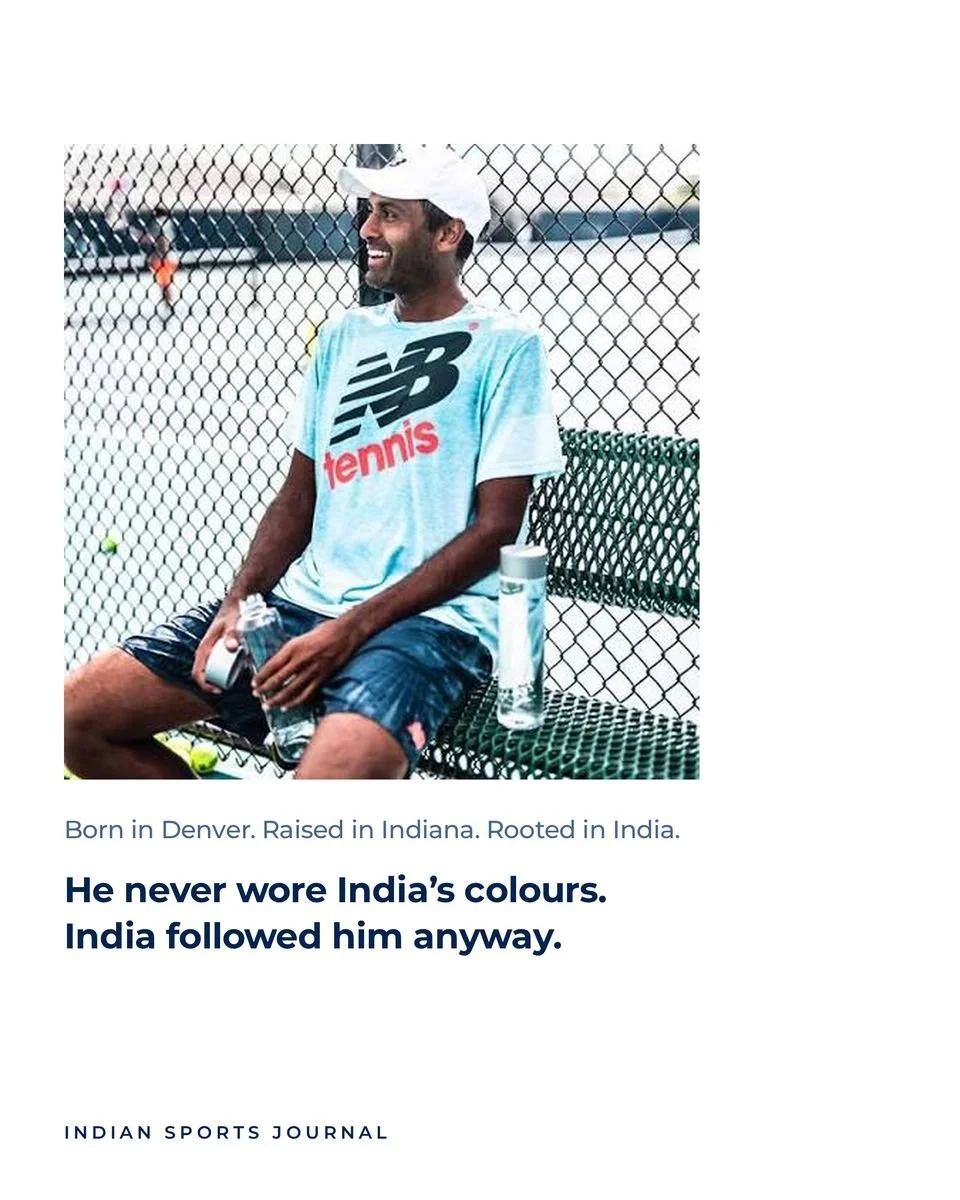
Ram is 42. He leaves with six Grand Slam titles — four in men's doubles with Salisbury, two in mixed with Barbora Krejčíková — two Olympic silver medals and 32 tour-level doubles titles, two of them at the ATP Finals, and he was the oldest first-time doubles world No. 1 when he reached the top in October 2022. Every one of those honours was won under the American flag. He was born in Denver to Indian parents: his father, Raghav, a Kannadiga from Bangalore, and his mother, Sushma, who by most published accounts is from Delhi. Indian tennis media have long covered him as one of their own.
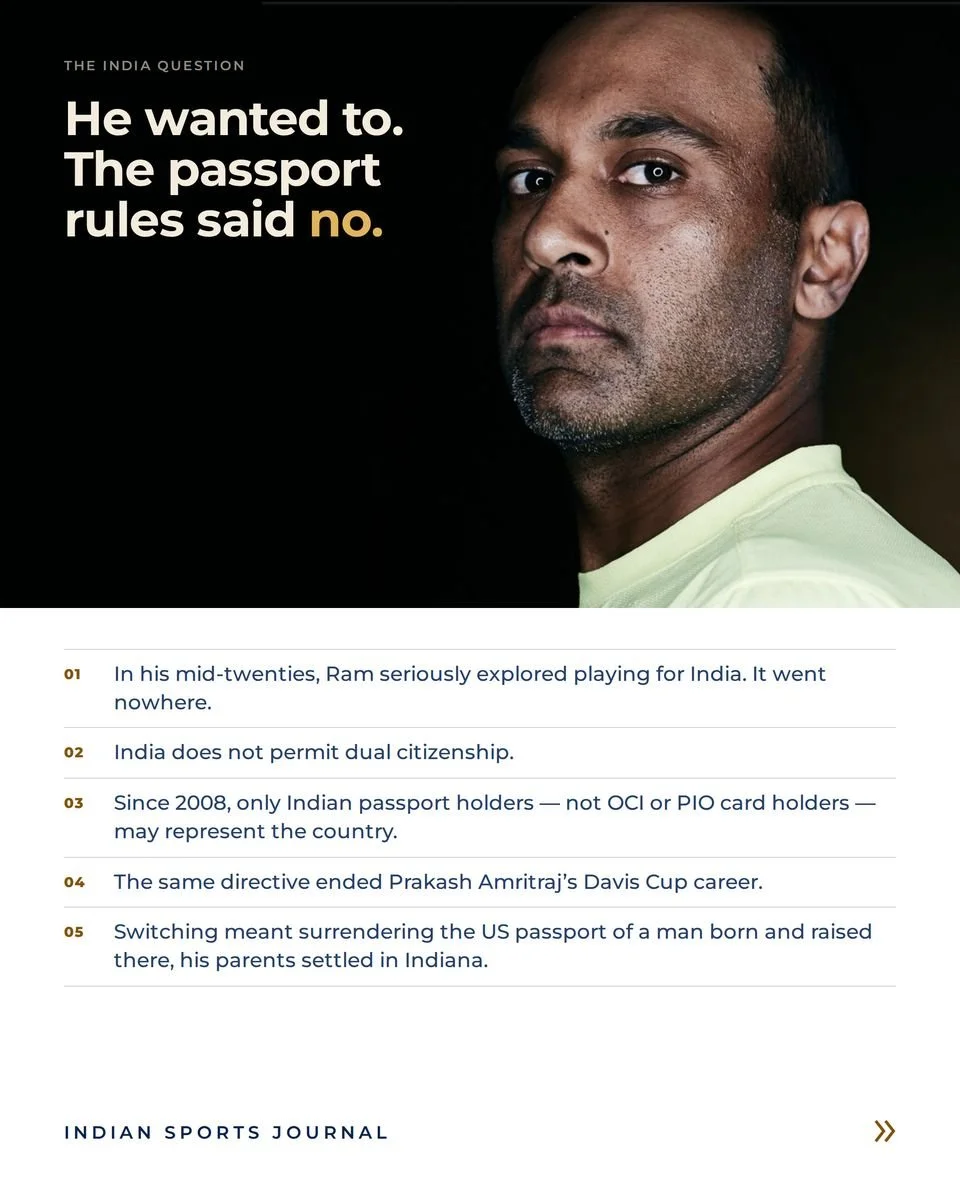
That is why the question that follows him in India — why didn't he play for India? — deserves a straight answer rather than a wistful one. He did look into it. In an interview with India Currents in 2022, he said he had thought about it in his mid-20s and that it "didn't really get too far". The reason was a rule, not a romance. India does not permit dual citizenship, and its sports ministry allows only Indian passport holders to represent the country. For a man born an American citizen, playing for India meant giving up the passport he was born with.
The second question — who he wanted to be as a player — has a cleaner answer. It is written into the way he played, and into the nickname the tour gave him.
Denver, Carmel, Champaign
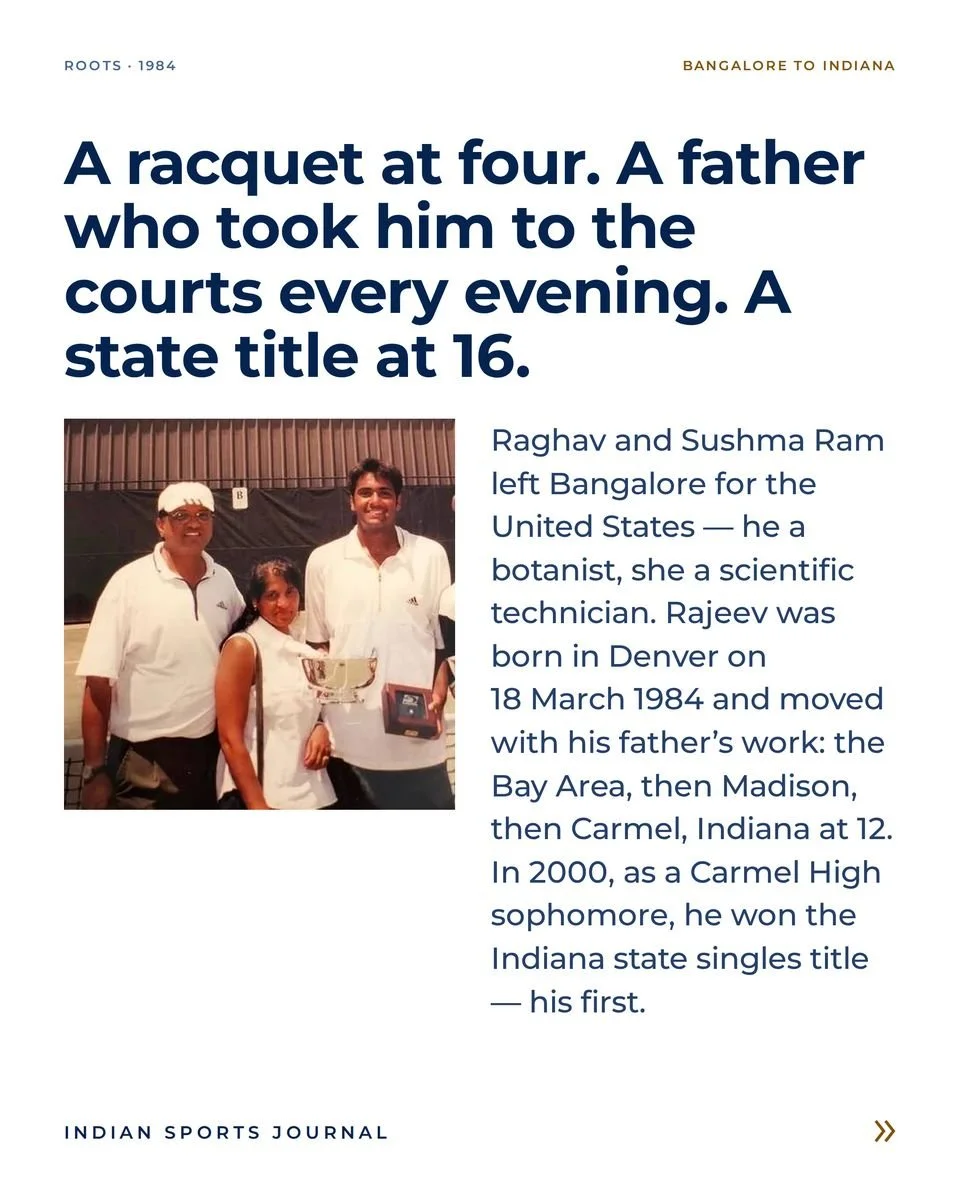
Ram was born on 18 March 1984 and grew up in Carmel, Indiana. Nobody in the family played tennis; his father took him to a court at their apartment complex, and he was holding a racquet at four. He began working with the coach Bryan Smith at 14, and Smith stayed with him for the rest of his career. He won the Indiana state high-school singles title for Carmel High School in 2000, as a sophomore, and graduated in 2002.
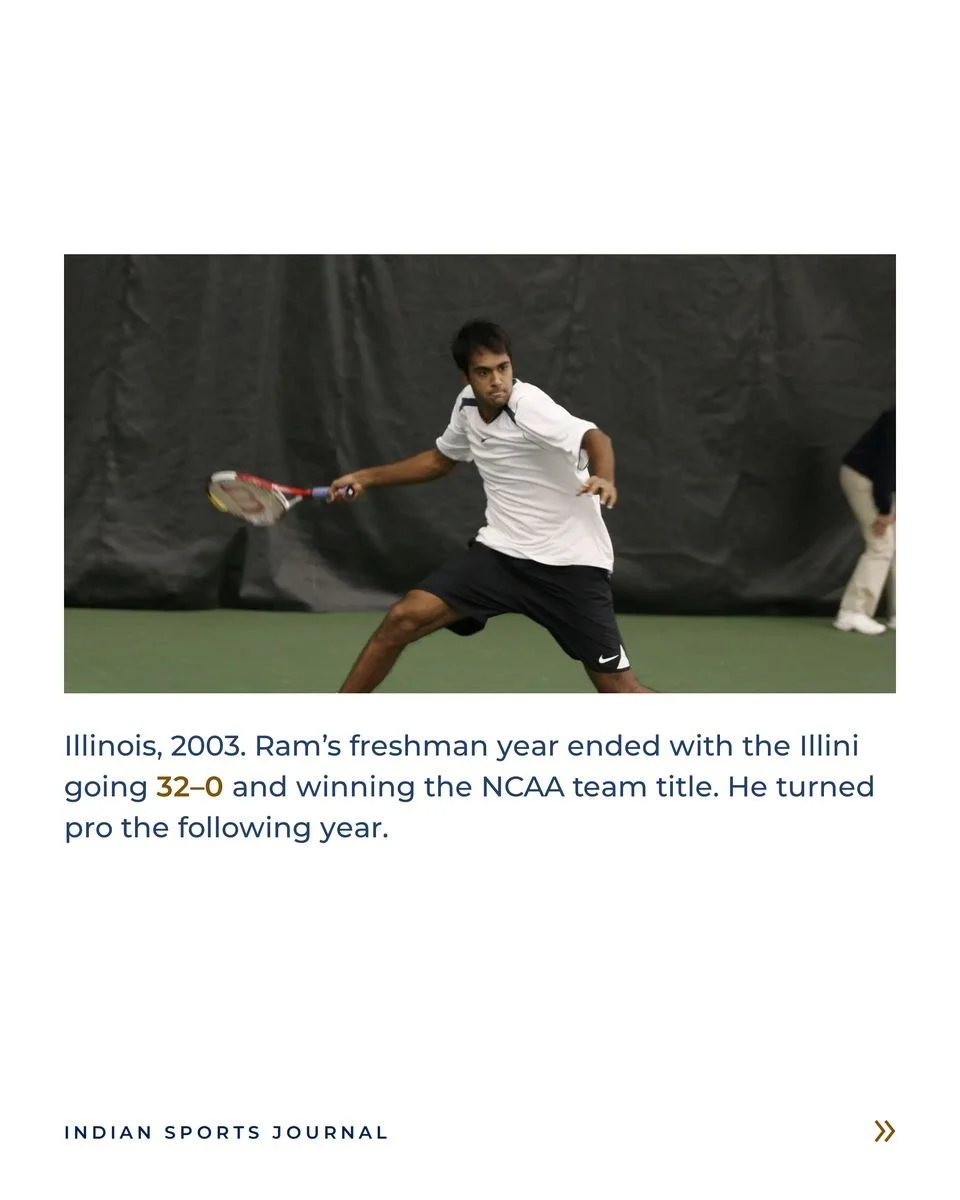
His college career lasted a single semester and produced a championship. He enrolled at Illinois in January 2003, under Tiley, and the Fighting Illini went 32-0 and won the NCAA team title; Ram also won the national doubles title with Brian Wilson. For more than a decade afterwards he played singles as well as doubles on the professional tour.
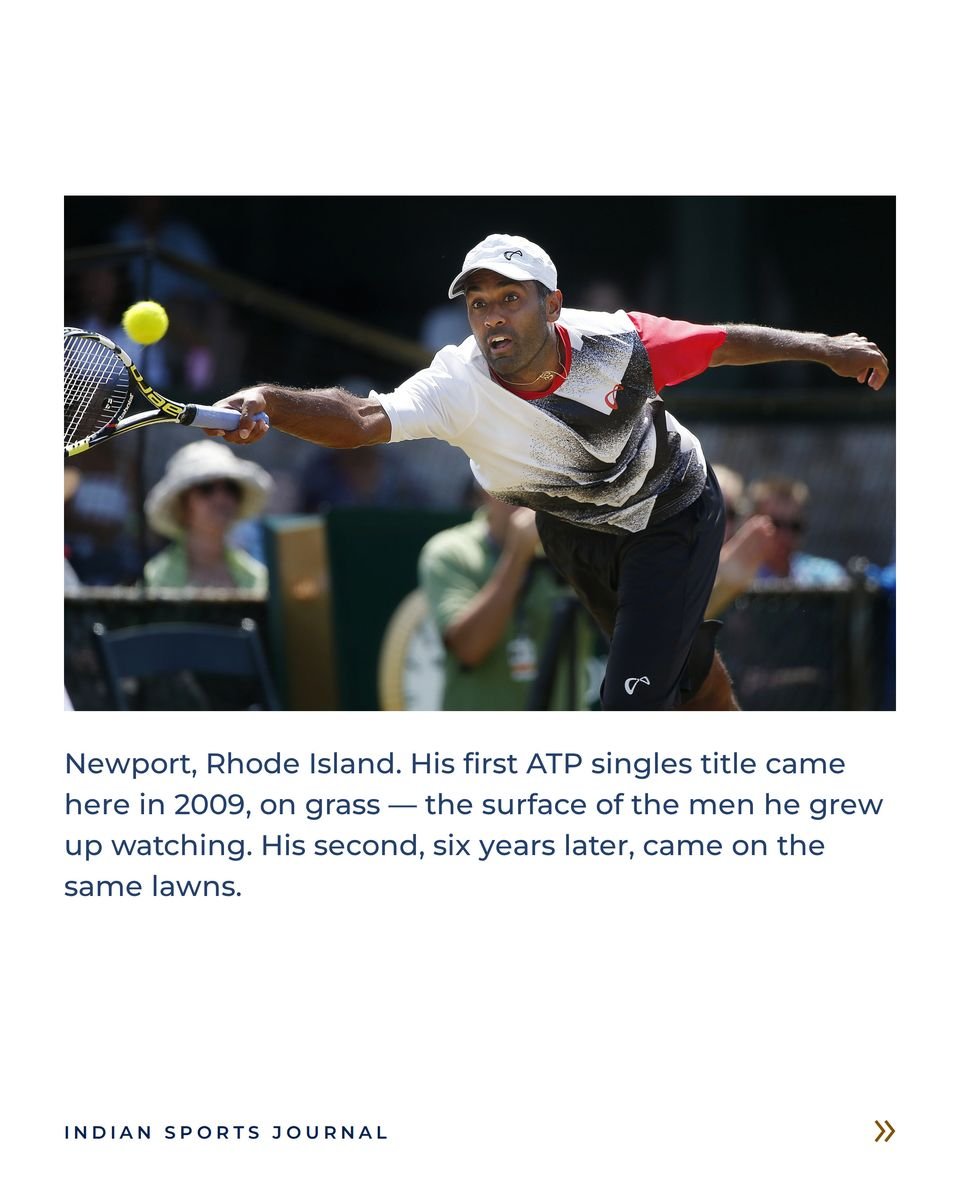
The singles record is modest by the standard of what came later, and that is part of the story. He won two ATP singles titles, both at the Hall of Fame Championships in Newport, in 2009 and 2015. He reached a career-high singles ranking of No. 56 in April 2016, at 32, and gave up singles in 2017. The family's connection to India stayed personal rather than sporting: he has described his Hindi as "decent" and has said he tried, unsuccessfully, to learn Kannada, the language of his father's family.
The India question
India's position is short to state. The country does not allow dual citizenship, and the sports ministry's rule is that only an Indian passport holder may represent India. The Overseas Citizen of India card held by members of the diaspora does not qualify. Ram was an American citizen by birth. For him, a place on an Indian team would have required renouncing his US passport.
The rule was not theoretical in Ram's generation. Prakash Amritraj, Vijay Amritraj's son, was born in the United States and played 10 Davis Cup ties for India before he was barred in 2008, Reuters reported in 2013. Vijay Amritraj called it "terribly unfair to someone's career". P.K. Deb, then the sports ministry's secretary, told Reuters that when the ministry went through the legal situation it found no option to let non-passport holders play for India. Ram was in his mid-20s in those years, which is when he said he considered India.
His own account, given to India Currents in October 2022, is the fullest ISJ has found: "I thought about it when I was in my mid 20's but it didn't really get too far because there were some issues with citizenship and passports, and some details that made it quite difficult." He added: "I have considered it, but at the end of the day, I was born in America, and I grew up here. But I respect my Indian heritage, so it was a tough choice."
It is worth being careful about what that does and does not say. It does not say India turned him away, and it does not say he regretted the choice. It says he looked, found the practical barrier, and weighed it against a life that was American from the start. ISJ has not found any record of a formal approach to the All India Tennis Association.
The pull
Family. Father Raghav, a Kannadiga from Bangalore; mother Sushma, by most accounts from Delhi.
Language. Hindi he calls "decent"; Kannada he tried and failed to learn.
Intent. He says he considered playing for India in his mid-20s.
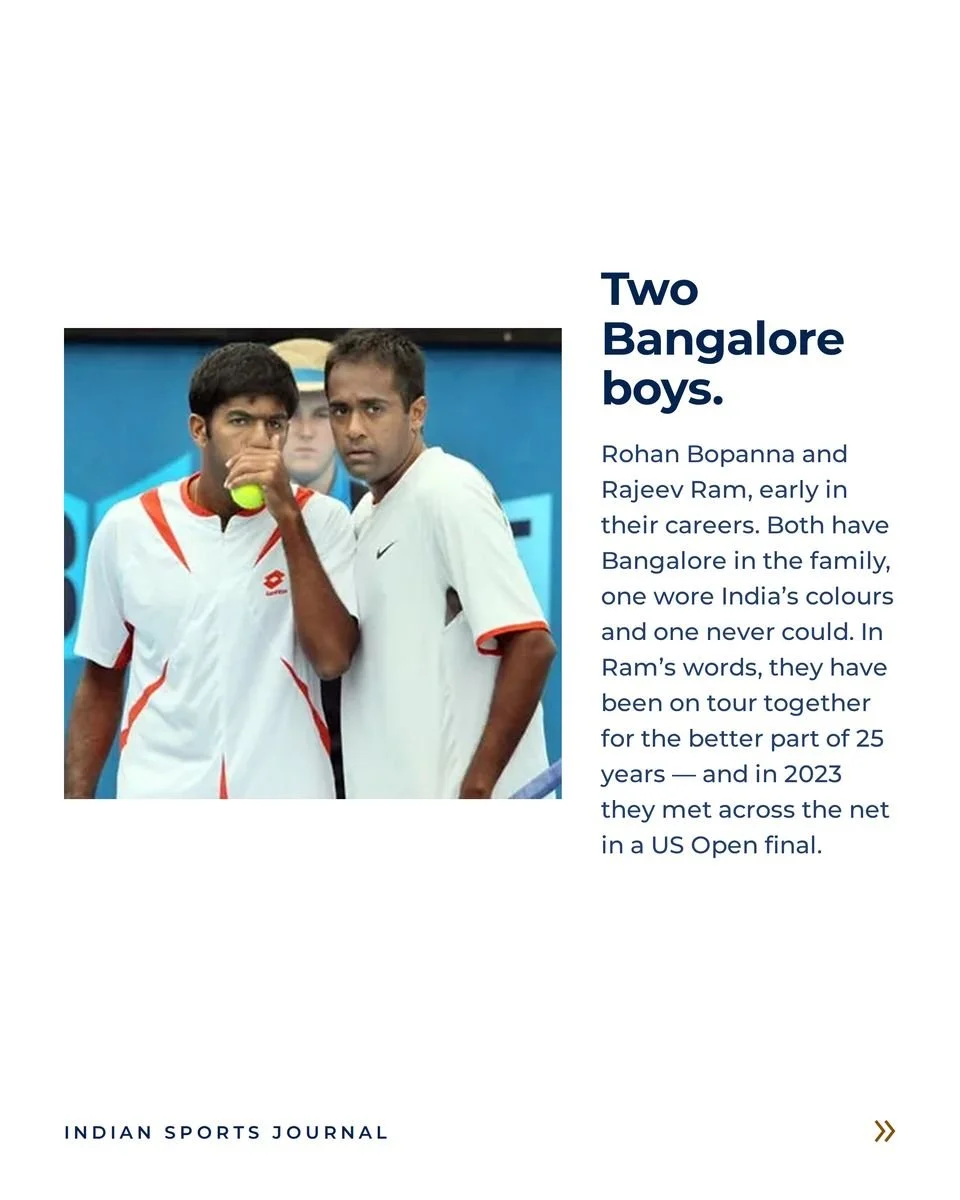
Crossings. He met India's best on the biggest stages: Sania Mirza and Rohan Bopanna at Rio 2016, Bopanna and Matthew Ebden in the 2023 US Open final.
The rule
Citizenship. Born in Denver, an American citizen from birth. India does not permit dual citizenship.
Eligibility. Only Indian passport holders may represent India; an OCI card does not qualify.
Precedent. The same rule ended US-born Prakash Amritraj's Davis Cup career for India in 2008, after 10 ties.
His words. "At the end of the day, I was born in America, and I grew up here."
Rio, and a night against India
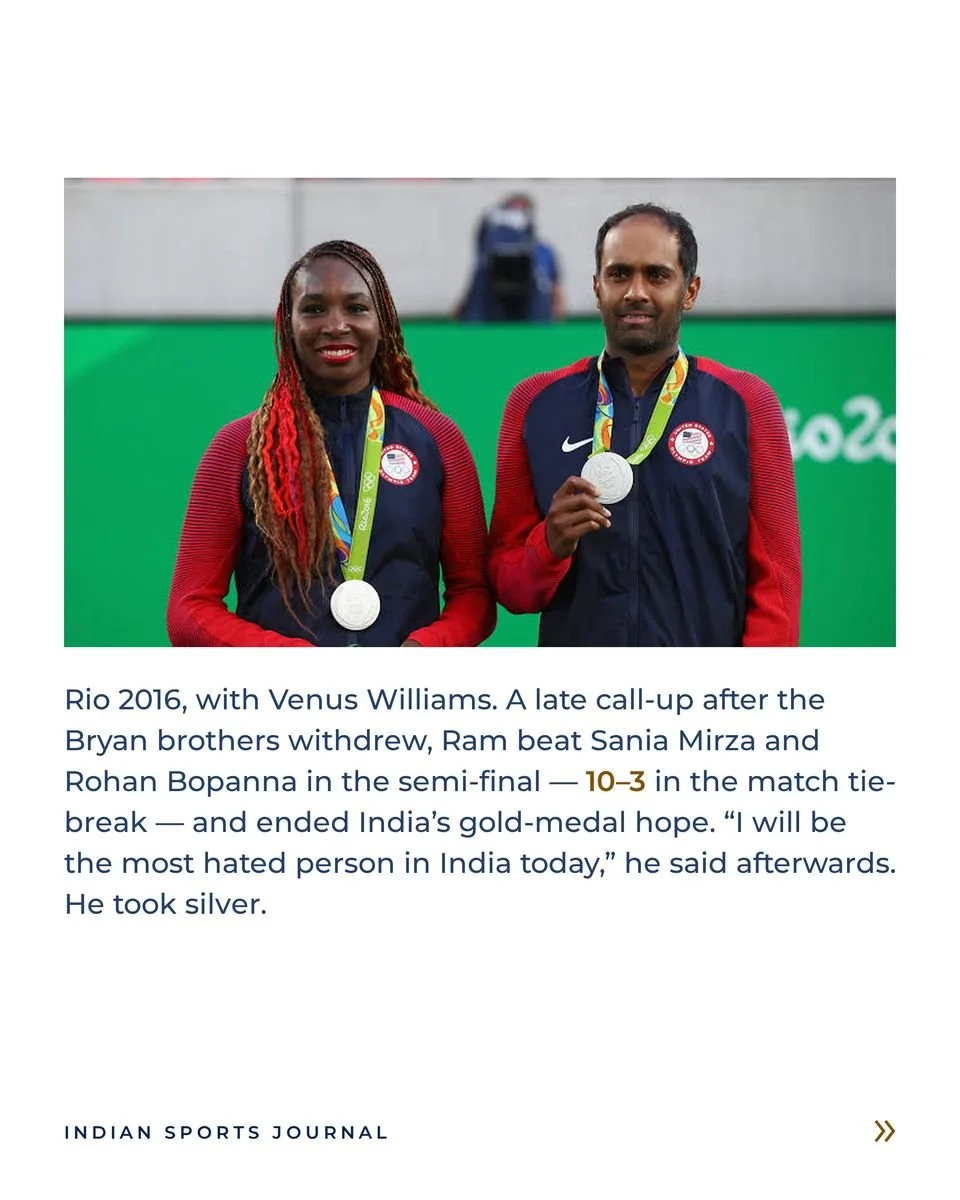
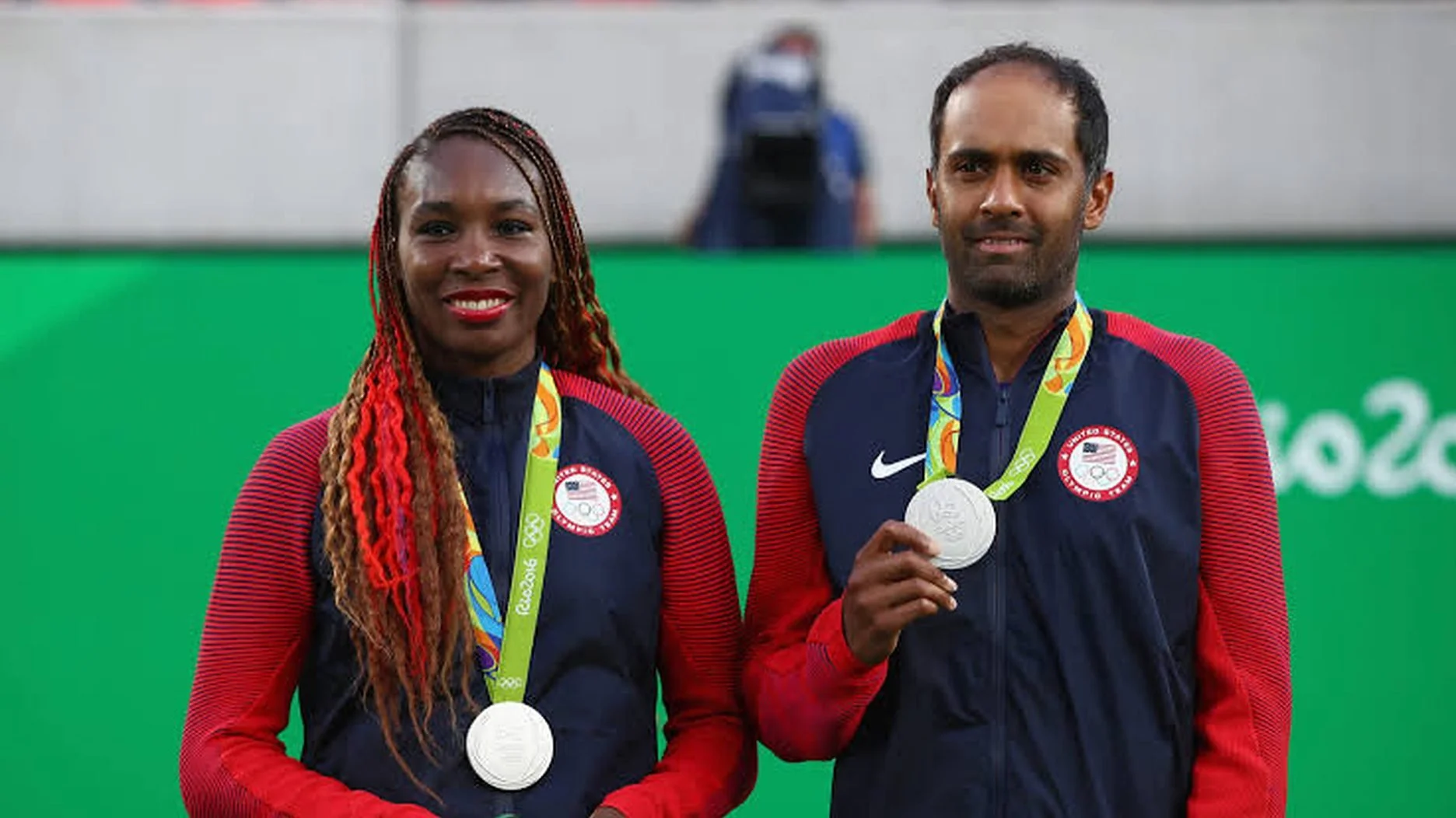
The closest Ram came to Indian tennis on the biggest stage was across the net. At the Rio Olympics in 2016 he partnered Venus Williams in the mixed doubles, and on 13 August they met Sania Mirza and Rohan Bopanna in the semi-finals. The Indians won the first set 6-2. The Americans took the second 6-2 and the match tie-break 10-3. After the match, Ram said exactly what it meant for the country his parents had left.
"I will be the most hated person in India today."
He followed it with a sentence that answers the representation question as neatly as anything he has said since: "I am a first generation American having been born in the US in 1984." The next day Mirza and Bopanna lost the bronze-medal match 1-6, 5-7 to the Czech pair of Lucie Hradecká and Radek Štěpánek, and Ram and Williams lost the gold-medal match to Bethanie Mattek-Sands and Jack Sock in a match tie-break. India's Olympic tennis medal count stayed at one, Leander Paes's singles bronze from Atlanta in 1996. It still is.
Seven years later the two strands met again in a Grand Slam final. At the 2023 US Open, Ram and Salisbury came from a set down to beat Bopanna and Ebden 2-6, 6-3, 6-4 for their third straight title. Bopanna was 43. In January 2024 he won the Australian Open with Ebden and became world No. 1 at 43, the oldest first-time No. 1 — a record that had belonged to Ram.
Sampras, Becker and "Rampras"
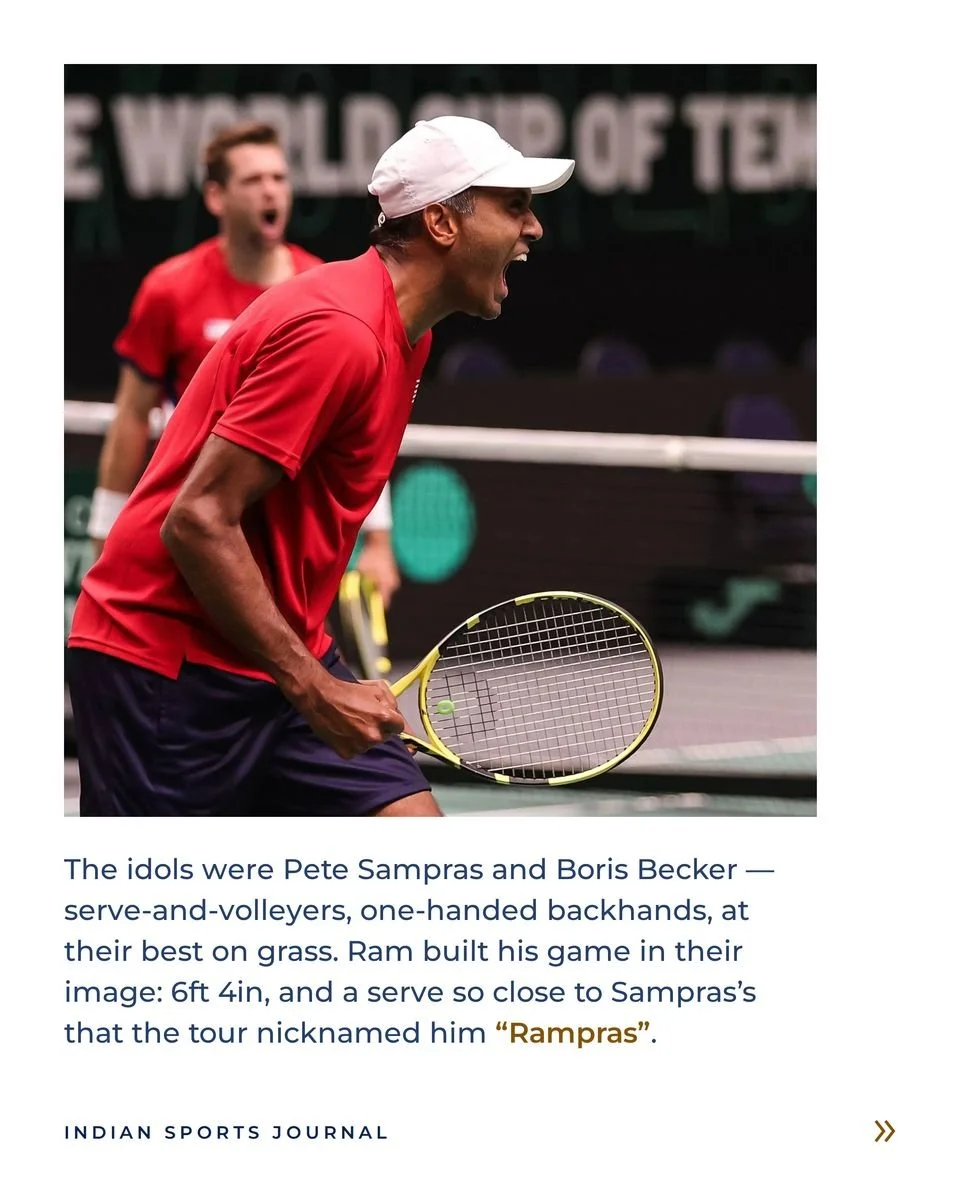
Ram's idols are on the record in his ATP biography: Pete Sampras and Boris Becker. Both were serve-and-volley players and multiple Wimbledon champions, and Ram built his game the same way. The ATP lists grass as his favourite surface and serve-and-volley as his favourite play, and the tour nicknamed him "Rampras" because his serve resembled Sampras's.
The influence shows in where his career peaked. His two singles titles both came on the grass at Newport. The same game carried over to doubles, where it took him to the top of the sport after his singles career ended. Neither idol was Indian. The heritage and the sporting influences ran on separate tracks.
Everything after 34
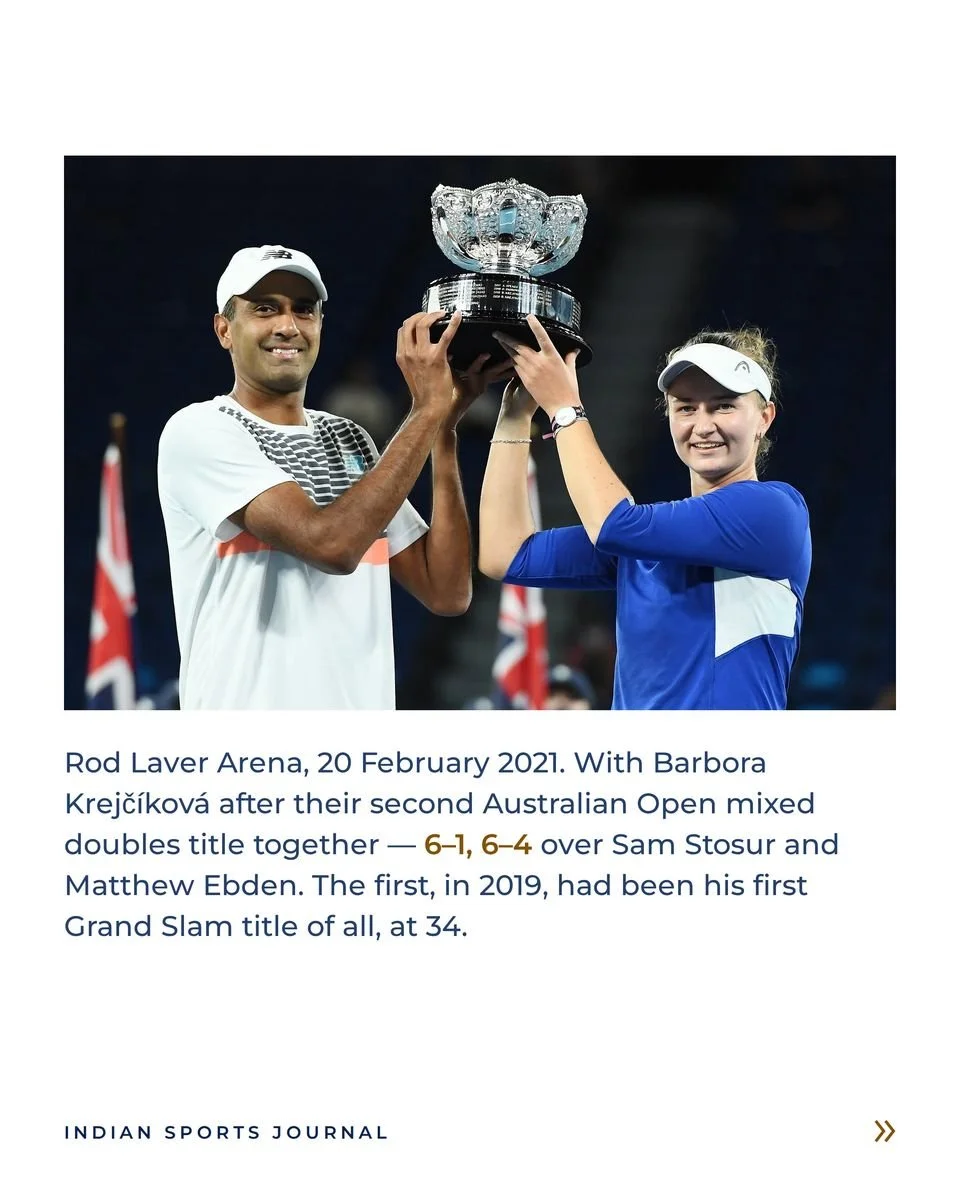
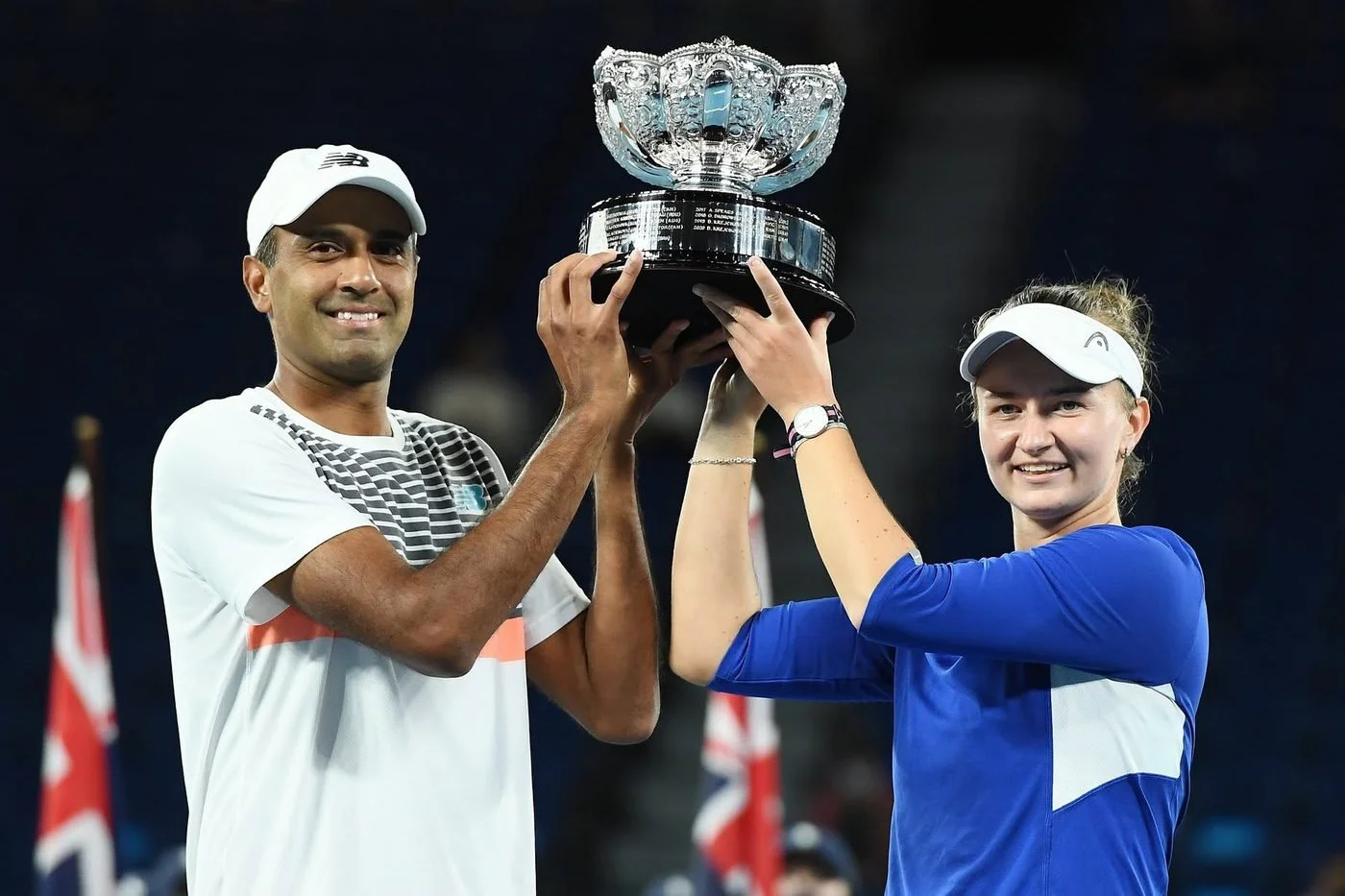
What makes Ram unusual is not only the size of his record but when it arrived. His first Grand Slam title came at the 2019 Australian Open, in the mixed doubles with Krejčíková, when he was 34. His last came at the 2023 US Open, when he was 39. In between he won the 2020 Australian Open men's doubles with Salisbury, the 2021 Australian Open mixed with Krejčíková, and the US Open men's doubles in 2021, 2022 and 2023.
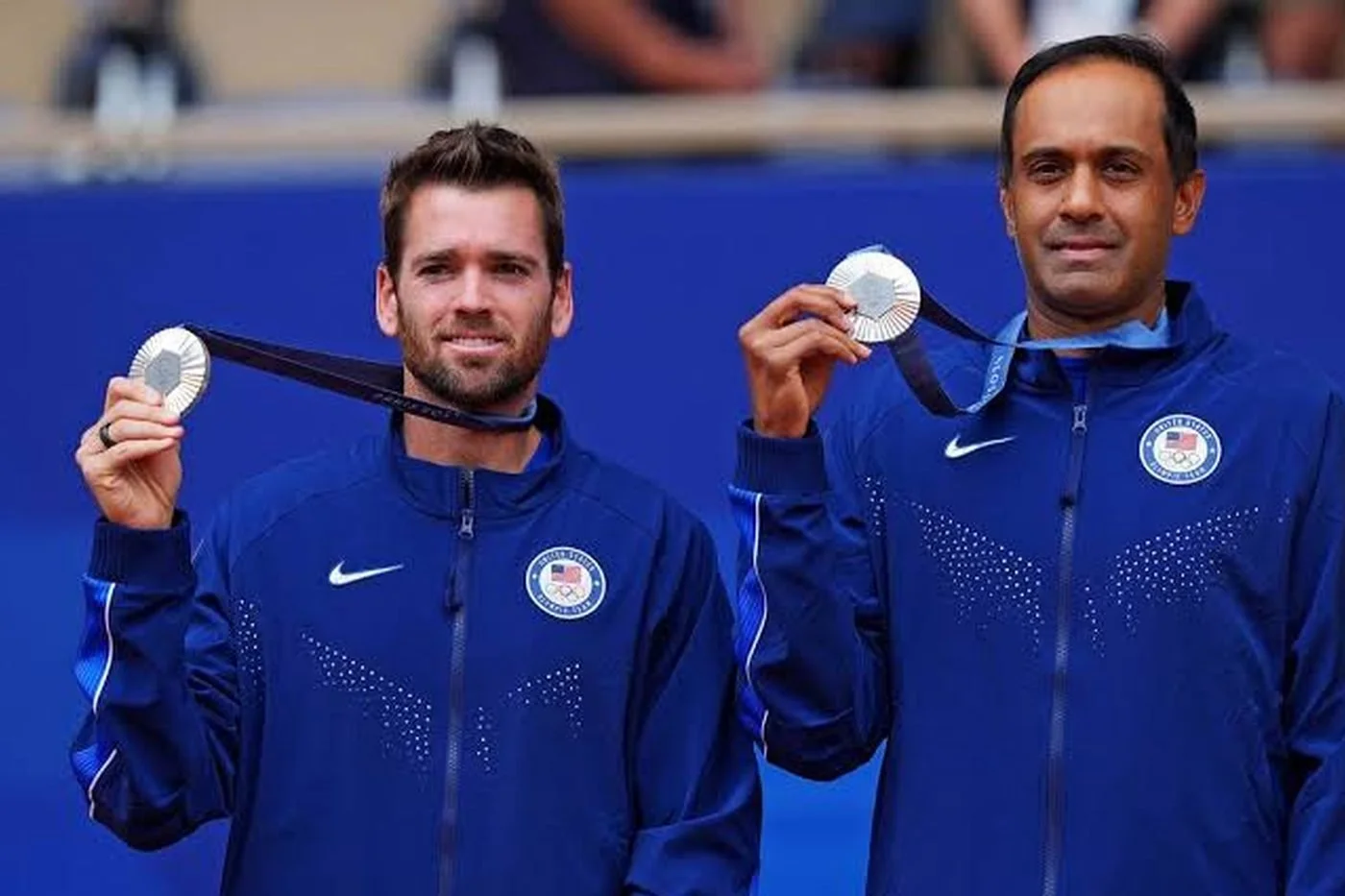
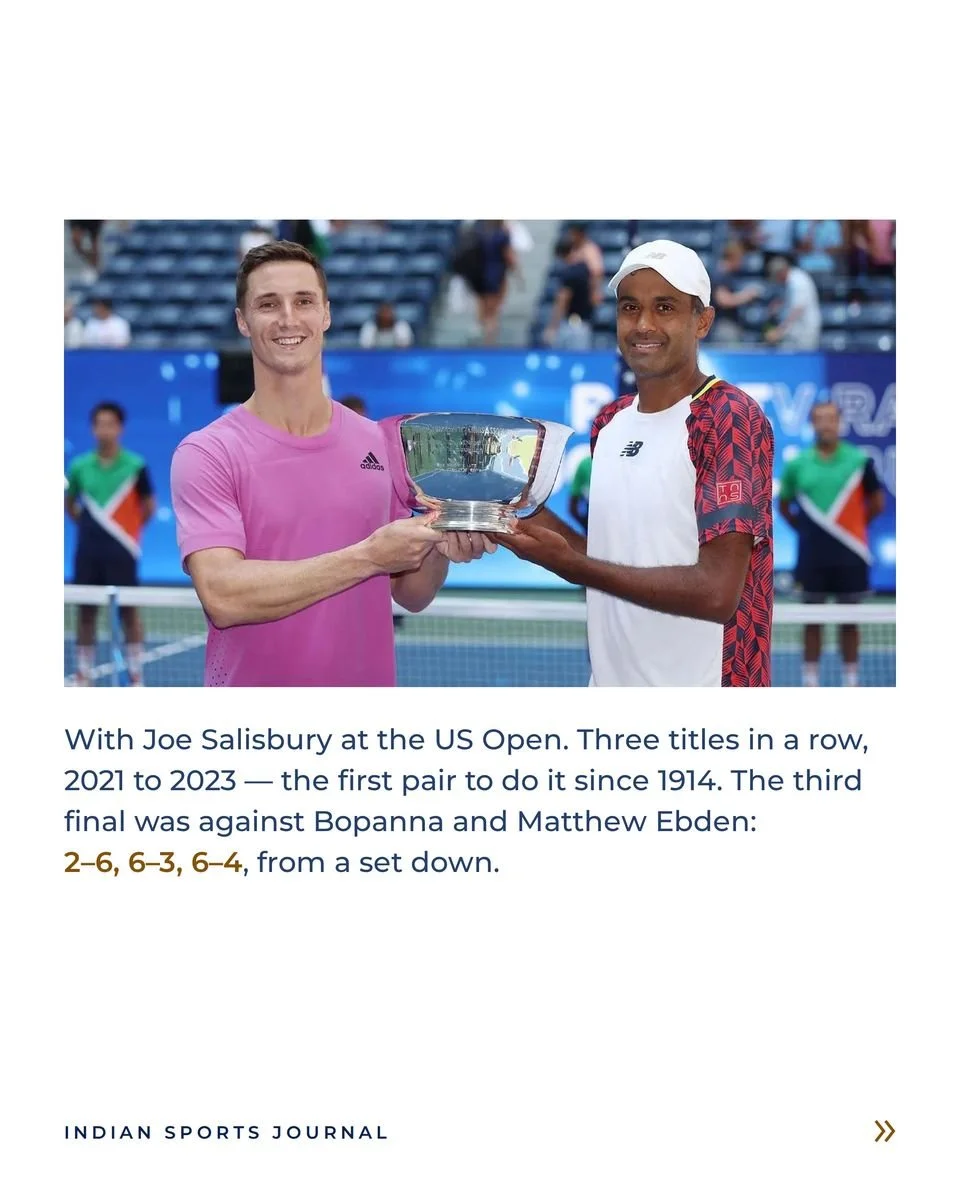
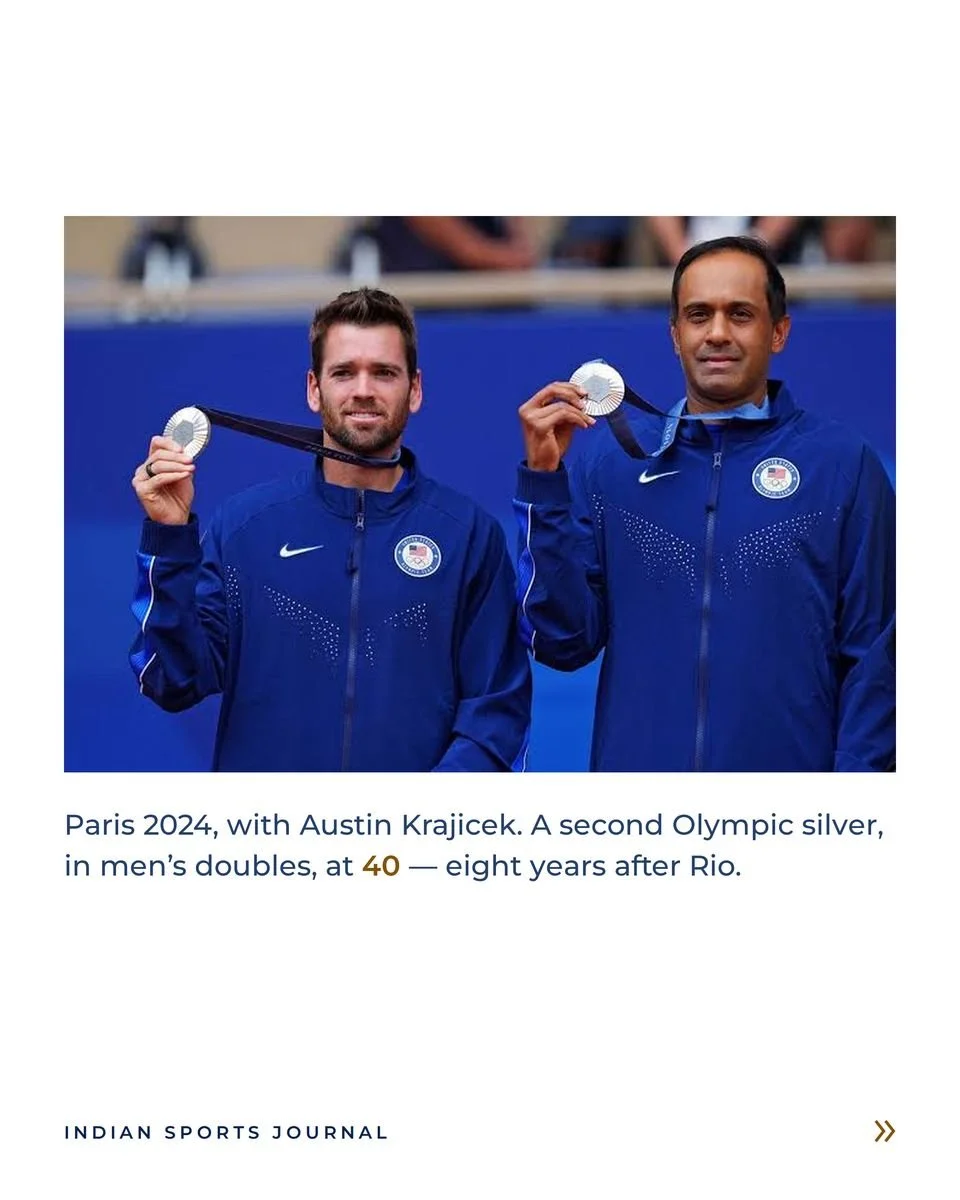
The three US Open titles were the first run of three in a row by any pair at the tournament since Maurice McLoughlin and Tom Bundy in 1912–14. He and Salisbury also won the ATP Finals in 2022 and 2023. The partnership with the Briton, eight years his junior, was the engine of all of it: four of the six majors, both ATP Finals titles and the climb to No. 1. Ram first reached the top of the doubles rankings on 3 October 2022, at 38, and at the time no player had become No. 1 for the first time at an older age. Almost everything that defines his record arrived after he turned 34, in the format he had once played alongside singles rather than instead of it. In Paris in 2024, aged 40, he won a second Olympic silver, in the men's doubles with Austin Krajicek, losing the final to Ebden and John Peers in a match tie-break. By the Olympic record books, that made him the oldest tennis player to win an Olympic medal in 116 years.
He also represented the United States in the Davis Cup, debuting in 2021. In 2024, with Krajicek, he won the doubles rubber that clinched a tie against Ukraine and a US place in the Finals group stage.
His father did not see most of it. Raghav Ram died of pancreatic cancer in April 2019, three months after his son's first Grand Slam title and before the five that followed. On Thursday, Rajeev Ram used part of his farewell speech to speak to him.
| Year | Event | Result |
|---|---|---|
| 2016 | Olympic Games, Rio · mixed doublesWith Venus Williams; beat Mirza/Bopanna in the semi-final, lost the final to Mattek-Sands/Sock 7-6(3), 1-6 [7-10] | Silver |
| 2019 | Australian Open · mixed doublesWith Barbora Krejčíková; beat Astra Sharma/John-Patrick Smith 7-6(3), 6-1 | Title |
| 2020 | Australian Open · men's doublesWith Joe Salisbury; beat Max Purcell/Luke Saville 6-4, 6-2 | Title |
| 2021 | Australian Open · mixed doublesWith Krejčíková; beat Samantha Stosur/Matthew Ebden 6-1, 6-4 | Title |
| 2021 | US Open · men's doublesWith Salisbury; beat Jamie Murray/Bruno Soares 3-6, 6-2, 6-2 | Title |
| 2022 | US Open · men's doublesWith Salisbury; beat Wesley Koolhof/Neal Skupski 7-6(4), 7-5 | Title |
| 2022 | ATP Finals, TurinWith Salisbury; beat Nikola Mektić/Mate Pavić 7-6(4), 6-4 | Title |
| 2023 | US Open · men's doublesWith Salisbury; beat Rohan Bopanna/Matthew Ebden 2-6, 6-3, 6-4 | Title |
| 2023 | ATP Finals, TurinWith Salisbury; beat Marcel Granollers/Horacio Zeballos 6-3, 6-4 | Title |
| 2024 | Olympic Games, Paris · men's doublesWith Austin Krajicek; lost the final to Ebden/John Peers 7-6(8), 6-7(1) [8-10] | Silver |
The India thread
Read in sequence, the Indian strand of Ram's career is a series of near-misses and crossings rather than a single decision.
The question of what Ram might have meant for India is unanswerable, and it is better left that way. Indian men's doubles in his era was not short of talent; Bopanna, Paes and Bhupathi were all Grand Slam champions, and Bopanna reached No. 1. What can be said is narrower and firmer. The rule that decided Ram's case is the same one that ended Prakash Amritraj's Davis Cup career, and the diaspora players it affects are, by definition, the ones born and raised elsewhere.
What he leaves
Ram's farewell was his own: Tiley, Butorac, his family, Salisbury beside him and an American stadium. He confirmed after the semi-final that it had been his last match, and the ATP quoted him calling it "kind of crazy that is going to be my last professional tennis match". By American Bazaar's count he had played the men's doubles at the US Open for 26 consecutive years, the most in the tournament's history.
Off the court there is the foundation. In 2014 he started EntouRaj for Kids in Indiana, now the Rajeev Ram Foundation, which runs tennis clinics for children from underserved areas. Its focus is local and American, which fits the rest of the story: the career was built in Indiana, at Illinois and on the American tour.
For Indian tennis, what he leaves is a reminder of how much of the sport's Indian story now plays out under other flags, and how precisely the rules draw that line. For Ram, the answer was settled early, even if, in his own words, it was a tough choice. On the night in Rio he introduced himself to India as "a first generation American having been born in the US in 1984". Ten years and another Olympic medal later, it is still the most accurate summary of the career. His farewell on a US Open court went, in the end, to the man who had brought the other half of it from Bangalore.
Salisbury followed him out. Joe Salisbury, 34, announced his own retirement from professional tennis on 16 September, six days after their last match together, according to Punto de Break.
The farewell post. In the days after the US Open, Ram posted a retirement message on social media, thanking supporters and his late father, Tennis365 reported. Boris Becker, one of the two players he grew up admiring, replied: "Well said Rajeev", according to EssentiallySports.
Sourcing and corrections. Last match and ceremony: ATP Tour (11 September 2026), EssentiallySports (11 September), American Bazaar (11 September), Punto de Break (17 September). Career record: ATP Tour player biography and retirement tribute (19 September); Wikipedia; Rajeev Ram Foundation. India question: India Currents (28 October 2022, updated January 2024); Reuters via Gulf Times (11 January 2013). Rio 2016: Sportskeeda and American Bazaar (15 August 2016); Wikipedia (Olympic results). Paris 2024: Current Publishing (6 August 2024). Bopanna: Wikipedia. US Open three-peat: Wikipedia list of US Open men's doubles champions. Fact-check (28 October): the India Currents quotes were checked word for word against the interview; the Rio quotes against the IANS match report (14 August 2016); the farewell lines against EssentiallySports, which has a further sentence ("He taught me how to play the game…") between the two quoted here, now paraphrased rather than dropped; idols, nickname and surface against the ATP biography. The Reuters line no longer says the Amritraj family was pressing for a reversal (the report does not say so), and Deb's remark is now attributed as he gave it. "Told Tennis Channel" became "confirmed" (IndyStar, ATP), and the 26-year count is now attributed to American Bazaar in the copy; the ATP's tribute quotes Ram saying he played the event "26 times", without "consecutive".
Corrections to ISJ's September carousels. The carousels said both parents came from Bangalore; most published accounts give his father as from Bangalore and his mother from Delhi (a 2016 American Bazaar report said both came from Bangalore, so this stays flagged). The citizenship quote on the carousel was a spliced paraphrase dated 2024; the interview is from October 2022 and the verbatim wording is used here. One carousel slide gave his age at his first Grand Slam title as 35; he was 34. A carousel line saying he took his father's ashes to India "that winter" and won his "first Grand Slam two months later" does not fit the dates (his first major preceded his father's death) and could not be re-verified, so it is left out. American Bazaar's claim that Ram and Salisbury are the "only" pair to win three straight US Opens is wrong; five earlier pairs did it before 1915, the last McLoughlin and Bundy in 1912–14.
Flag: the retirement announcement. Sources differ on the sequence. The ATP treated the semi-final as his final match on 11 September; Punto de Break says he confirmed it to Tennis Channel at the tournament; Tennis365 describes the announcement as a social-media post after the US Open. ISJ could not establish whether Ram told the tournament in advance. The 26 consecutive US Open appearances figure is single-sourced to American Bazaar.
Flag: left out. The September carousel's claim that Ram was a late call-up to the 2016 Olympic team after the Bryan brothers withdrew was not re-verified for this article. The ATP's two versions of his post-match quote ("couldn't be better" and, via USOpen.org, "couldn't have been better") differ, so neither is used. His height, the family's earlier moves before Carmel and his parents' occupations, all on the carousels, were not re-verified. EssentiallySports and the ATP say Ram was the opponent in Butorac's last professional match (the 2016 US Open, per EssentiallySports); that is about Butorac's career, not Ram's last singles match (2017), and it is not used. A formal approach to the AITA is not on the record.